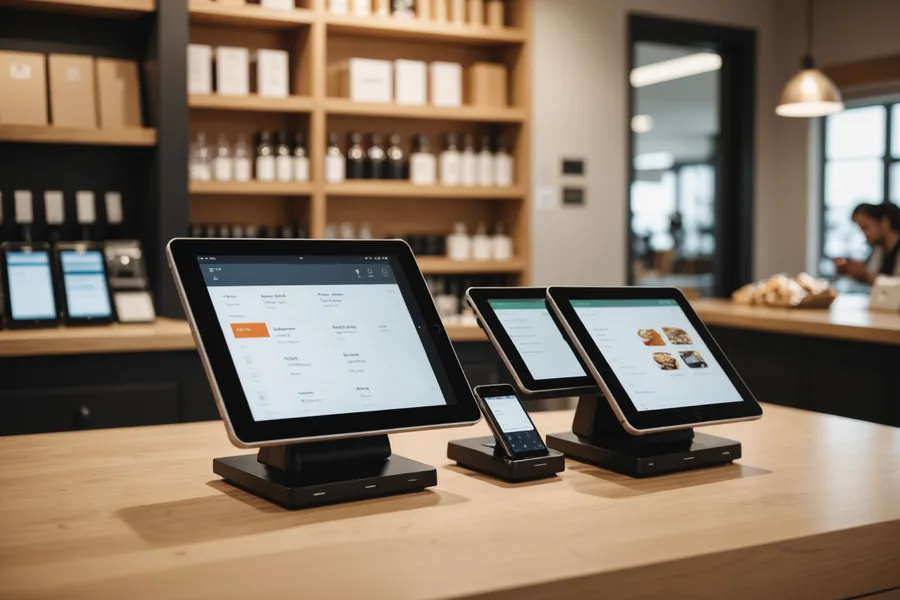
The checkout queue at a physical store is one of the oldest unsolved problems in retail operations. Customers have disliked it for decades. Retailers have known for decades that it costs them sales. The technology capable of eliminating it in most cases has been available for at least five years. And yet, as of 2024, the vast majority of independent retailers in North America still process transactions the same way they did in 2005: items to a counter, staff enters them, customer pays at the terminal, receipt prints.
This is not a story about technology lagging behind. It is a story about the real blockers to adoption, which were structural and economic rather than technical. And it is a story about what changed between 2023 and 2025 to make those blockers smaller than they have ever been.
The blockers were never the technology
Mobile scan-and-go pilots existed in grocery chains as early as 2018. Scan-and-go apps were available on major chains' loyalty platforms from 2019 onward. The technical capability to let a shopper scan items on their phone and pay without going to a register was demonstrated at scale before COVID-19 changed anything about shopper behavior.
What stopped the independent retailer from doing the same thing was a combination of three structural problems. First, most mobile checkout systems required a dedicated app, and building or licensing a dedicated app was expensive, technically complex, and required ongoing maintenance that most independent retailers do not have engineering resources to support. Second, the transaction path had to connect to the store's POS and inventory system, which for most independent retailers meant a separate integration project every time something changed in either system. Third, the loss-prevention question had no good answer for an independent retailer without a dedicated LP team: how do you know a shopper on mobile checkout scanned everything they are carrying?
Each of these problems was solvable in theory but required resources that most growing independent retailers do not have. The gap between "technically possible" and "accessible to a boutique pet store in Montreal" was large and real.
What changed in 2023 and 2024
Three things converged that materially reduced the barriers for independent retailers.
The first was the maturation of browser-based barcode scanning. The getUserMedia API reached sufficient stability on both iOS Safari and Android Chrome to support reliable barcode decoding without a native app. Shoppers no longer needed to install anything. The checkout experience opens in the browser they already have, which means the install-friction barrier, one of the biggest drop-off points in all previous mobile checkout systems, went away.
The second was Shopify's POS API reaching a state where third-party integrations could connect deeply enough to handle a real transaction, not just a supplemental flow. When a mobile checkout transaction can write directly to the same order record as the POS terminal, with the same inventory decrement and the same customer tagging, the two-system problem collapses into one system with two input paths. This is the integration architecture Leav uses, and it was not possible at this level of depth before the POS API matured.
The third was the camera-based exit verification technology becoming accessible at independent retailer cost levels. Exit verification had previously required expensive sensor grids and dedicated hardware. The version that makes sense for a small store uses a single camera and software-side object detection, running on equipment the store may already have or can add for a few hundred dollars. That is a cost profile that works for an owner-operator business.
The question retailers actually ask
When we talk to independent retailers about mobile checkout, the conversation rarely starts with the technical blockers. It starts with the operational question: if I add mobile checkout, how does my day change?
The honest answer is: it mostly does not change. Staff still staff the counter. The counter still handles transactions the way it always has. What changes is that a portion of simple transactions, shoppers who know what they want and have a card ready, route themselves through the mobile path and never interact with the counter at all. The counter queue gets shorter during peak windows. Staff who were spending time on straightforward scan-and-pay transactions have more time for customers who need help.
The setup is a one-time effort: connect your Shopify store, print and post the QR codes, run a short internal test. The ongoing operational overhead is low. Mobile transactions show up in the same reports as counter transactions. Refunds and exchanges for mobile purchases process through the same Shopify admin as any other order. There is no separate daily reconciliation for the mobile channel.
The remaining real friction points
It would be inaccurate to say every barrier has been removed. Some remain and are worth being direct about.
Age-restricted items are a real constraint. Alcohol, tobacco, and age-gated product categories cannot be fully self-served on a mobile checkout platform without additional age verification infrastructure. A store with a significant portion of age-restricted SKUs either needs to implement a verification layer or accept that mobile checkout handles the non-restricted portion of their volume while the counter handles everything else.
Customer adoption is gradual, not immediate. A store that adds mobile checkout should not expect 40% of transactions to shift in the first month. Early adopter shoppers will try it. Others will watch and follow. The typical adoption curve in pilot stores is a slow ramp over several months, not a sudden shift. Retailers who set realistic expectations about adoption speed find the product works well. Those who expect an immediate transformation of their traffic pattern end up disappointed by a result that is actually quite normal.
Mobile signal quality inside some store layouts can be a real technical issue. Basement spaces, concrete construction, and basement convenience stores in dense urban areas sometimes have weak data signal. Shoppers who try to open the checkout session on a weak connection will have a worse experience. There are mitigations (local Wi-Fi, store-provided QR code that connects to guest Wi-Fi), but this is a legitimate environmental constraint worth assessing before launch.
Why this moment matters for independent retail
Independent retailers have watched digital commerce create a widening experience gap between what shoppers expect from online interactions and what they get when they walk into a physical store. The checkout queue is the most visible expression of that gap. It is a reminder that the physical shopping experience, in the moment that matters most for completing a purchase, lags the digital equivalent by years.
The pieces are now in place for independent retailers to close that gap without enterprise budgets or dedicated engineering teams. The technology is accessible, the integration path is defined, and the operational change is manageable. The reasons that justified waiting are mostly gone. The retailers who move now get the learning-curve advantage and the competitive differentiation that comes from being the first store in their category or neighborhood to offer a genuinely queue-free checkout option.
Try Leav free
Mobile checkout for your Shopify store. 14 days free.
No credit card required. Connect your store and go live in 48 hours.
Start Free Trial