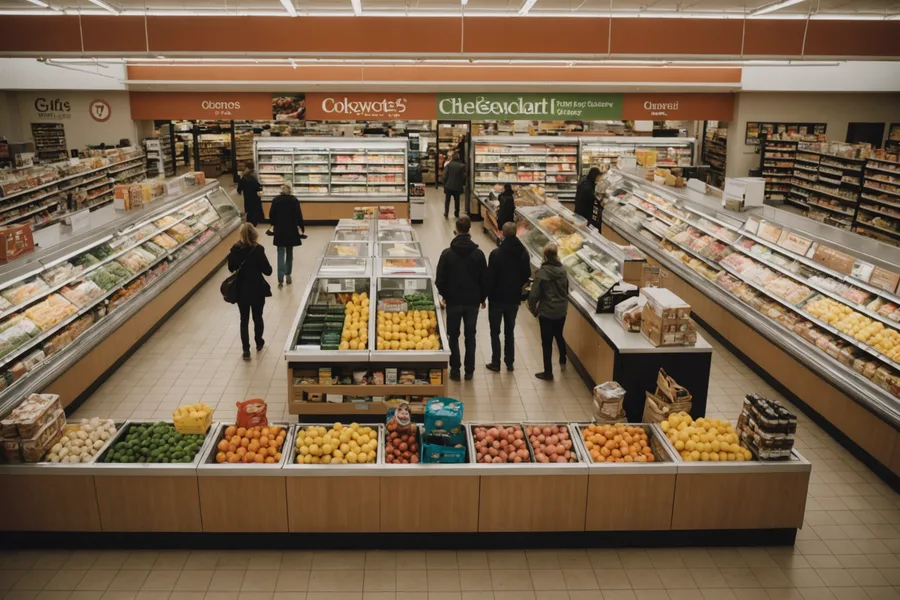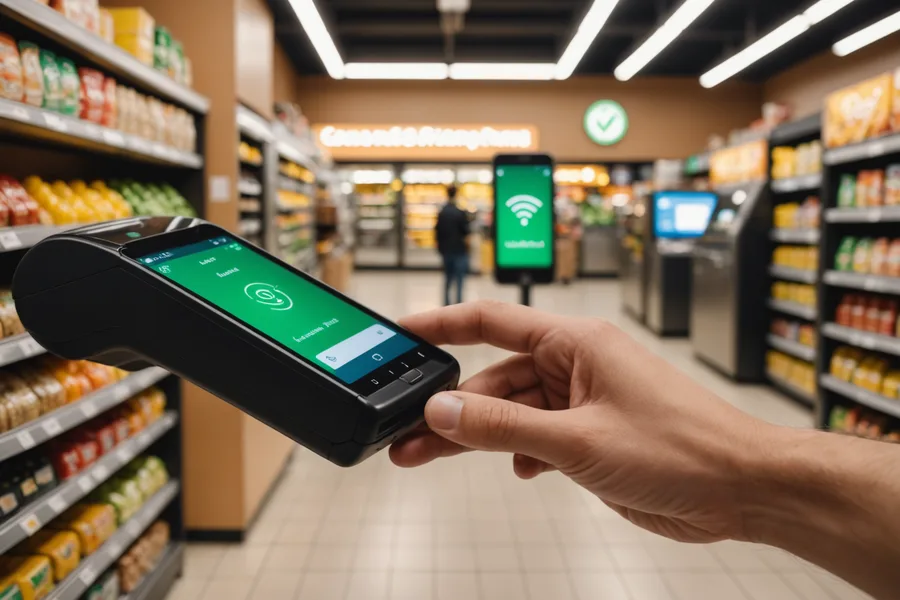
Contactless payment penetration in grocery retail is one of those topics where the headline number tells a misleadingly positive story. Survey data on mobile payment adoption in food retail has been climbing steadily, and by some measures the majority of grocery shoppers in North America have used a digital wallet at least once. But "used once" and "uses regularly at a particular store type" are different metrics, and the gap matters for how independent retailers should think about where they actually stand.
The pattern we observed in building Leav's merchant base is consistent with what broader industry data suggests: national and regional chain grocers moved aggressively on contactless payment infrastructure in 2022 and 2023, deploying NFC-capable terminals at most checkout lanes, enabling tap-to-pay across their POS systems, and running in-store campaigns to accelerate adoption. By 2024, contactless payment at a chain grocer had become the expected experience for a large share of shoppers, particularly in urban markets.
Independent grocers moved more slowly, and the reasons are worth understanding rather than dismissing.
Why the independent-to-chain gap exists and why it is narrowing
The contactless payment infrastructure gap between chains and independents was not primarily a technology adoption problem, it was a capital allocation problem. A regional grocer with 80 locations can negotiate a terminal refresh across the whole estate with the payment processor and spread the cost. A single-location independent negotiating with the same processor is paying full freight on hardware, and the business case for a terminal upgrade is less obvious when the store's existing equipment handles the current transaction mix.
By 2025 and into 2026, this dynamic has shifted for two reasons. First, POS hardware refresh cycles brought a larger share of independent stores to modern terminals naturally, without a specific contactless upgrade project. Second, Shopify POS adoption among independent food retailers accelerated, and Shopify's payment infrastructure defaults to supporting Apple Pay and Google Pay on the Shopify card readers. An independent grocer who adopted Shopify POS for its inventory management capabilities got contactless payment support as part of the same deployment.
The result is that a meaningful number of independent grocers are now equipped to accept contactless payment but have not yet seen usage rates that match what chains see at comparable locations. The infrastructure is in place; the shopper habit has not fully transferred.
The shopper behavior piece that infrastructure does not solve
Contactless payment at the counter is a well-understood behavior for most shoppers now. The question of whether a shopper uses tap-to-pay at a given store is largely about whether the terminal clearly supports it and whether staff are comfortable with the transaction flow. These are solvable problems.
The harder problem for independent grocery is the category of mobile payment that goes beyond contactless tap at a staffed counter: mobile-initiated checkout, where the shopper controls the full transaction from their phone rather than handing payment to a terminal. This is a different behavior, and the adoption curve for this category at independent stores is at an earlier point in 2026 than contactless tap was at chains in 2022.
The parallel is relevant. Chains had the infrastructure and the scale to run adoption campaigns for contactless tap. Independent stores do not have marketing budgets or staff capacity for an adoption campaign. The path to mobile-initiated checkout adoption at independents needs to be more passive: the setup at the store makes the option visible and compelling, and adoption builds transaction by transaction without a campaign behind it.
What basket composition data says about grocery specifically
Grocery is a category where basket size and trip frequency interact with mobile checkout in specific ways. Average grocery transaction values in independent stores tend to be lower than in chain grocery, because the shopper mix skews more heavily toward convenience trips (picking up a few items) rather than full weekly shops. Convenience trip shoppers are the segment most likely to experience queue-related friction because they are time-constrained. A shopper doing a full weekly shop can factor in a four-minute queue. A shopper picking up three items for dinner at 5:45 PM cannot.
This basket composition pattern means that the value proposition for mobile checkout in independent grocery is concentrated in a specific shopper type, not spread evenly across the transaction mix. Stores that communicate mobile checkout as an option specifically for quick trips, small baskets, and busy peak periods see better adoption rates for those use cases than stores that present it as a general alternative to the counter.
The 2026 picture for independents who have not yet moved
If you are running an independent grocery store in 2026 and have not yet deployed any form of mobile-initiated checkout, the context is this: contactless payment acceptance is table stakes and probably already handled by your POS hardware. The next category of payment experience, mobile-initiated self-checkout, is where independent grocery currently sits at roughly the adoption point that contactless tap was at in 2021 for chains. Early, but the underlying consumer readiness is substantially higher than it was then.
The shopper behavior Leav is designed to serve is already established: most grocery shoppers under 50 have a digital wallet set up on their phone, and using a phone to scan a barcode in a store is a well-understood interaction from supermarket app experiences even if those experiences varied in quality. The friction is not on the shopper side. It is on the store setup side, and that is a more tractable problem than changing consumer behavior.
Independent grocers who move on this in 2026 are not early adopters taking a risk. They are bringing their experience up to the level their shoppers already expect elsewhere.
Try Leav free
Mobile checkout for your Shopify store. 14 days free.
No credit card required. Connect your store and go live in 48 hours.
Start Free Trial