The word "convenience" in convenience retail is a promise about time. Shoppers choose the corner store over the supermarket because they want a specific item quickly, not because the selection is better or the prices are lower. When the checkout process at a convenience store takes 4 minutes because there is one cashier handling three customers who each want cigarettes, lottery tickets, and a mobile top-up, the store has failed at the one thing its name guarantees.
The 60-second standard is informal but consistent across store operations research: convenience retail customers expect their total in-store time from door to door to be under a minute or two for small basket transactions. That is not just impatience. It reflects the actual trip economics. A shopper who stops in for a coffee and a snack on the way to work has allocated roughly 90 seconds for the task. If the visit takes 4 minutes, that was 2.5 minutes the store borrowed from the customer's day without permission.
Where the time actually goes
A typical convenience transaction breaks down into three segments: browse and select (variable, but often 20 to 40 seconds for a simple purchase), wait in queue (the most variable and often the longest), and the checkout interaction itself. The checkout interaction at a staffed counter includes the cashier scanning items, the customer deciding on payment method, the tap or PIN entry, and the receipt step. For a 3-item transaction with a card payment, the checkout interaction itself is usually 25 to 45 seconds if there is no queue and the cashier is efficient.
The queue is where the 60-second standard breaks down. A single cashier handling one customer who wants a prepaid top-up, a money order, or a returns exchange can create a 3 to 5 minute wait for every person behind them. Convenience stores typically staff lean, with one person on the register during off-peak hours. When that person is occupied with a complex transaction or temporarily stepped away from the counter, every subsequent customer waits.
The interesting thing about this problem is that the majority of convenience transactions are simple: scan one to four items, tap to pay, leave. The complex transactions (tobacco verification, lottery ticket redemption, money services) are a minority of volume but they can dominate visible queue time because they require the cashier's full attention and often take longer.
What mobile checkout can and cannot do in this context
Mobile scan-and-go is a natural fit for convenience retail's simple basket majority, and a poor fit for its complex transaction minority. A shopper buying a water and a protein bar can scan both items on their phone, pay, and walk out in under 40 seconds total including the scan time. That is fast. But a shopper who needs to verify age for an alcohol purchase, redeem a loyalty offer against a promotional item, or access a stored-value transaction cannot complete those interactions through a standard mobile checkout flow without additional verification infrastructure.
This creates a split-lane reality that some convenience operators have started to formalize. The mobile checkout path handles the self-service-eligible basket: packaged goods, beverages, non-restricted items. The counter remains available for restricted items, services, and shoppers who prefer staffed checkout. The store does not need to eliminate the counter to get the speed benefit. It needs to shift a portion of its simple transactions off the counter queue so that the remaining counter interactions get faster service.
In practice, if 60 percent of a convenience store's transactions are simple packaged good purchases and even half of those migrate to mobile checkout, the average queue depth at the counter drops substantially during peak hours. The cashier who was handling 8 customers in a morning rush now handles 4 or 5, and each gets faster attention. The total throughput of the store goes up without adding staff.
Basket size and the compact scan experience
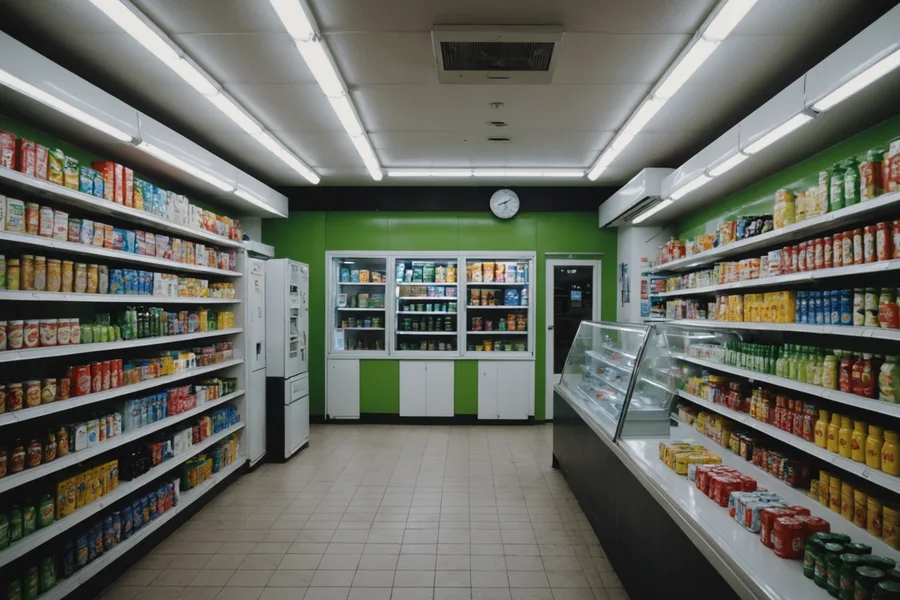
Convenience retail average basket sizes tend to be small, typically 1.5 to 3.5 items per transaction. This is actually an advantage for mobile scan-and-go. The friction of pulling out a phone, opening a browser session, and scanning items is meaningful if you have 40 items to scan. For 2 or 3 items, the total scanning time is 15 to 25 seconds, and the checkout confirmation adds another 10 seconds. The entire process is faster than waiting behind one person at the counter.
The QR code at entry is the key friction point. If a shopper has to hunt for the QR code, the flow starts badly. Placement matters: it should be at the entry door and repeated near the refrigeration and hot food areas where impulse purchases happen. At a well-designed pilot location, a first-time user can find the code, scan it, and have the checkout session open in under 15 seconds. On return visits, returning shoppers with an existing session open the browser tab they already have in history, which is faster still.
The case for the convenience operator who runs on Shopify POS
Convenience stores are not a traditional Shopify merchant category, but the number of small urban convenience operators running on Shopify POS has grown as the platform has added more POS hardware options and better inventory management for brick-and-mortar. For an operator on Shopify POS, the Leav integration adds mobile checkout without changing the POS setup. Mobile transactions post to the same inventory and sales records as counter transactions. The morning cash-out report has one line per transaction type, and the reconciliation is identical to a normal counter day.
The operator does not need to manage two separate systems. They do not need to train staff to reconcile a separate mobile payment stream. The mobile transaction confirmation email that the customer receives references the same store name and branding as any other Shopify order confirmation. For a one-person or two-person operation where every additional complexity is a real time cost, the integration simplicity is not a minor detail.
The constraint worth being honest about
Mobile checkout in convenience retail works well for the shopper who arrives with their phone ready and a simple basket. It does not work as well for the shopper who does not have good data coverage inside a concrete-walled basement convenience store, for the shopper who is on an older device with a slow camera, or for the shopper who is in a genuine hurry and finds the one-time setup flow slower than the line they were trying to avoid.
These are real cases. The solution is not to oversell the technology as a complete replacement for staffed checkout. The honest operational model is a parallel option: keep the counter, add the mobile path, and measure which transaction types shift over time. Stores that have done this report that the shift happens gradually and concentrates in the simple-basket segment, which is exactly where the speed benefit is highest.
A convenience store that routes its 3-item basket shoppers through a 35-second mobile flow while keeping the counter for everything else has solved the queue problem for most of its transactions without removing the human interaction that some shoppers and all complex transactions still need.
Try Leav free
Mobile checkout for your Shopify store. 14 days free.
No credit card required. Connect your store and go live in 48 hours.
Start Free Trial